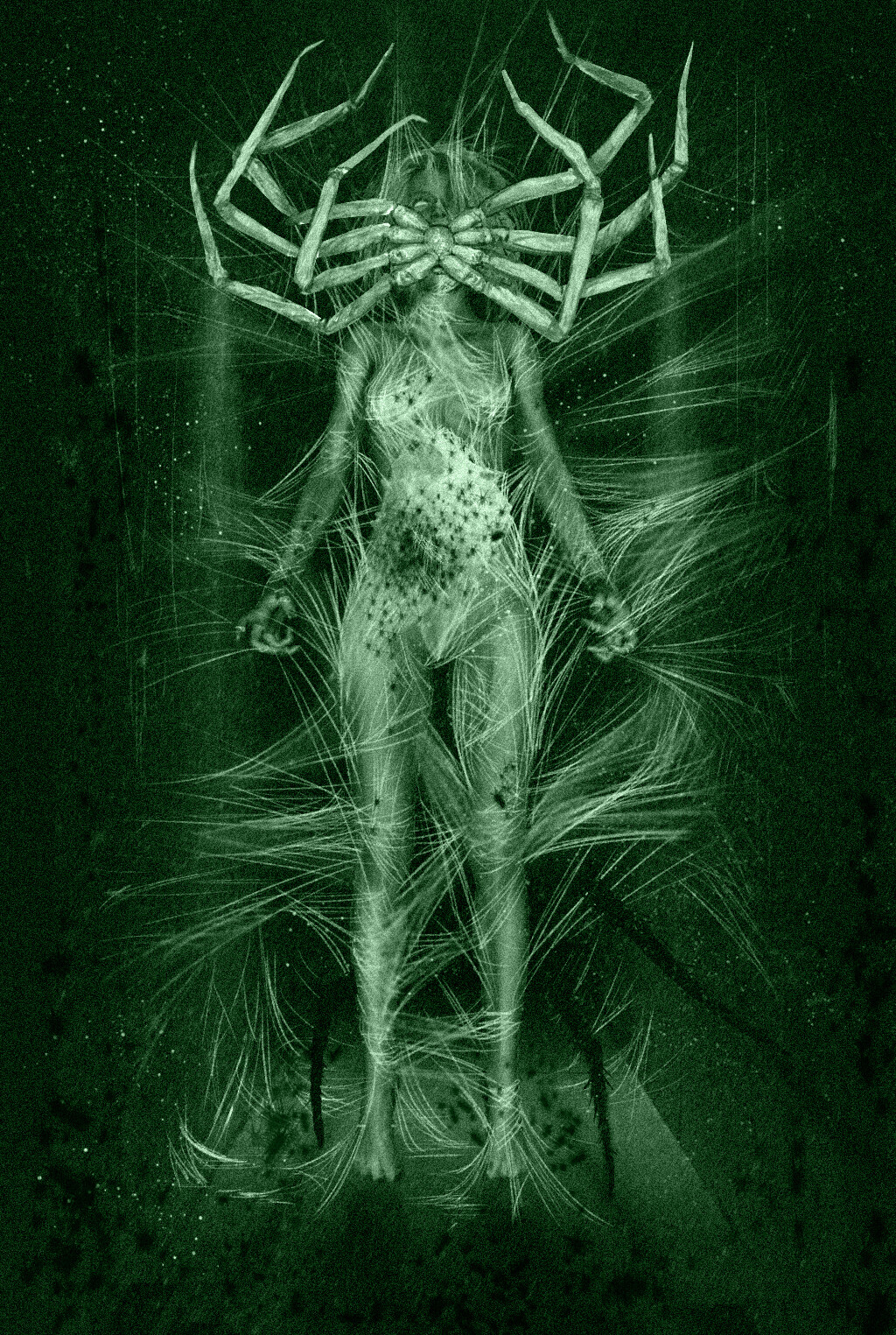
Appetizer, Doppelgangers
INT. CRAB DUNGEON. GYMNASIUM 11
The gymnasium has gothic styled vaulted ceiling and is the size of a cathedral. Where one would expect windows, there are instead large motivational posters and charts explaining nutrition and health. Throughout Gymnasium 11 are floor mats and scattered obstacle courses. Several pairs of hodgepodge humanoid creatures are sparring. In one corner, DEREK observes a vicious match between a lithe and scarred elf and LISETTE.
Both figures are stalking in a circle around one another, striking and parrying as opportunity arises. The elf's rapier bites and stabs as LISETTE parries with her dagger and ducks, swinging into openings and leaping over rebuttals. With a flurry of action, LISETTE steps to the left of a rapier aimed for her heart and presses her dagger against the elf's neck.
DEREK: Coo.
Elf and human draw back and sheathe their weapons before bowing to one another. CRAB suddenly appears behind DEREK, clapping for LISETTE.
LISETTE: Master CRAB, a surprise to see you down here. How was my performance?
DEREK: Coo.
CRAB: Yeah, gotta say you've been getting better. It's only been a few weeks and you're slashing and stabbing with the best of them.
LISETTE: It is all thanks to Sir DEREK's tutelage and your kindness in providing these facilities.
LISETTE glances around the room suddenly.
LISETTE: Has something... changed?
CRAB: Oh, yeah, narrative format just shifted left a bit, trying something new. Don't worry about it.
LISETTE: Once more, I am afraid that I am at a loss to the ways of wizards. With how my training is proceeding, when do you think I will be strong enough to return and defeat the face-stealing monsters?
CRAB: Doppelgangers. Well, your fighting skills are much improved and you've rested long enough. It's high time we start teaching you about just what it is that you're up against. You two finish up and meet me in Lecture Hall 4.
INT. CRAB DUNGEON. LECTURE HALL 4
Two hundred empty chairs and desks are arranged in rows, sloping down on a slight incline and facing a long wooden stage with a podium to one side and a projector screen set in the middle. LISETTE enters the room and finds a seat in the middle rows.
Just as she sits down, CRAB enters the room, followed by a parade of skeletons who file in to empty chairs across the hall.
CRAB: Don't mind them. I work better with an audience and they could use the exercise. So, let's get to it. There may be some things you don't understand just now, but one day you may come to uncover their meaning. Now, on to the show.
The projector hums to life.
FIRST DISH: ORIGINS
Ere Babylon was dust,
The Magus Zoroaster, my dead child,
Met his own image walking in the garden.
That apparition, sole of men, he saw.
For know there are two worlds of life and death:
One that which thou beholdest; but the other
Is underneath the grave, where do inhabit
The shadows of all forms that think and live
Till death unite them and they part no more
-Percy Bysshe Shelley, Prometheus Unbound, lines 191–199
CRAB: So, what is a doppelganger?
LISETTE: Those monsters that attacked me. They are face stealers. Horrible, frightful creatures that mimic people's behaviors and likenesses.
CRAB: Well, that's certainly a sort of doppelganger. You see, throughout history the doppelganger has had a most curious evolution, and eventually when D&D came about, the doppelganger saw its first implementation in tabletop play with the Greyhawk supplement in 1975 and has been pretty consistently included just about everywhere.
LISETTE: ... what is an RPG? Did this Gary create these monsters? What does a gray hawk have to do with this?
CRAB: Oh, right, fourth wall. Maybe we should go a bit further back in time and start at the beginning.
LISETTE: Will that tell me how to defeat them?
CRAB: All in good time. First, we need to establish a common contextual basis to work our discussions from. O Wraith of Research, Mad and Rabid, I unshackle you now that you may present us your findings!
The projector howls in torment and sputters as violent and oily black smoke pours out and the presentation begins.
We'll use the more common spelling present in RPG media of doppelganger as opposed to the German doppelgänger, which would be broadly more accurate as the term originates from the German Romanticist period as a central trope in gothic literature. The author Jean Paul coined the term in the 1796 novel Siebenkäs, wherein an unhappy marriage is ended when the husband fakes his own death (Fonseca). In the footnotes we have the beginning of the literary term doppelganger which Jean Paul initially defines as:
so heissen sie Leute die sie [sich] selbst sehen
"so people who see themselves are called"
The word itself can be translated as "double goer" and doppelgangers or the habit of seeing oneself appears to have become more common in the Enlightenment era. E.T.A. Hoffmann continues the budding tradition with his story "Die Doppeltgänger" in 1821 and then, more famously, with Die Elixiere des Teufels (The Devil's Elixir) and "The Sand-Man" in his collection Nachtstücken. Truly, the list of 1800s doppelganger stories goes on and on, with Robert Louis Stevenson's The Strange Case of Dr. Jekyll and Mr. Hyde (1886), Fyodor Dostoevsky's The Double (1846), Hans Christian Andersen's The Shadow (1847) and, most in line with the modern concept of the doppelganger, in Edgar Allen Poe's "William Wilson" (1839).

These Enlightenment era incarnations of the doppelganger are certainly not the earliest conception of the idea of a double. There are a variety of claims to the mythological origin of doppelgangers and doubles[1], as Otto Rank attests in "Der Doppelgaenger" (1914) that ancient traditions and folklore held the double as the first conception of the soul, related to beliefs that the shadow was a second self. In the last two hundred years there have been continuing folk tales surrounding Catherine the Great who is alleged to have seen her double and had her soldiers shoot at it until it disappeared (Sherman), Abraham Lincoln who saw his doppelganger in a mirror (Borchard), and of course Percy Bysshe Shelley. Shelley's account gives us a most thorough examination of the doppelganger, and one that will ring familiar to modern audiences. Let's have a read of his famous encounter as recorded by Mary Shelley:
"...Williams went to Shelley, who had been wakened by my getting out of bed—he said that he had not been asleep, and that it was a vision that he saw that had frightened him.
But as he declared that he had not screamed, it was certainly a dream, and no waking vision. What had frightened him was this. He dreamt that, lying as he did in bed, Edward and Jane came in to him; they were in the most horrible condition; their bodies lacerated, their bones starting through their skin, their faces pale yet stained with blood; they could hardly walk, but Edward was the weakest, and Jane was supporting him. Edward said, “Get up, Shelley, the sea is flooding the house, and it is all coming down.” Shelley got up, he thought, and went to his window that looked on the terrace and the sea, and thought he saw the sea rushing in. Suddenly his vision changed, and he saw the figure of himself strangling me; that had made him rush into my room, yet, fearful of frightening me, he dared not approach the bed, when my jumping out awoke him, or, as he phrased it, caused his vision to vanish.
All this was frightful enough, and talking it over the next morning, he told me that he had had many visions lately; he had seen the figure of himself, which met him as he walked on the terrace and said to him, “How long do you mean to be content?” no very terrific words, and certainly not prophetic of what has occurred. But Shelley had often seen these figures when ill; but the strangest thing is that Mrs. Williams saw him. Now Jane, though a woman of sensibility, has not much imagination, and is not in the slightest degree nervous, neither in dreams nor otherwise. She was standing one day, the day before I was taken ill, at a window that looked on the terrace, with Trelawny. It was day. She saw, as she thought, Shelley pass by the window, as he often was then, without a coat or jacket; he passed again. Now, as he passed both times the same way, and as from the side towards which he went each time there was no way to get back except past the window again (except over a wall 20 feet from the ground), she was struck at her seeing him pass twice thus, and looked out and seeing him no more, she cried, “Good God, can Shelley have leapt from the wall? Where can he be gone?” “Shelley,” said Trelawny, “no Shelley has passed. What do you mean?” Trelawny says that she trembled exceedingly when she heard this, and it proved, indeed, that Shelley had never been on the terrace, and was far off at the time she saw him. Well, we thought no more of these things, and I slowly got better."
- The Life and Letters of Mary Wollstonecraft Shelley
From these letters, we can see Percy Bysshe Shelley's doppelganger encounters were of the nefarious nature, as he encounters visions of his doppelganger strangling Mary Shelley as well as his doppelganger asking, which I can only read with the thickest layers of Victorian sarcasm and disgust at the subject, "When will you be content?". It is this version of the doppelganger, cruel and exhibiting behaviors contrary to the primary subject's asserted ego, which would continue to set the world of gothic literature alight.
We also have the "identical person" tales appearing around the same era. Dickens' A Tale of Two Cities (1859) sees no occult or anomalous means, rather just two people who look the
same. These sorts of stories have the doppelganger function not as a
beast, but instead a contrivance to allow a plot twist in one way or
another, a common plot in our time will have the people who look the
same commit a crime in the name of the other and get away with it. On
the lighter side, there is the "separated from birth" trope which we can
see in media from Shakespeare's A Comedy of Errors (1594) all the way to The Parent Trap (1998).
These cases, again, are not the monstrous identity stealing
doppelgangers, but instead alter egos or just look a likes. For our purposes, these do not count as doppelgangers as they are rarely used to do something key to the role of the monster- challenge a sense of personal identity.
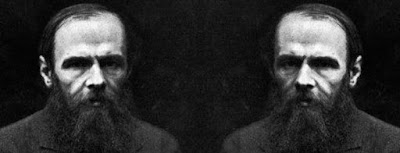
Back to this early on the idea of a doppelganger as being distinct from a double or shadow, this begins taking route in culture as the gothic writers continue to take hold. So, what is this creature that haunts these varied Victorian era writers? "It is necessary to be clear about the nature of the true double, or Doppelganger. The Doppelganger is a second self, or alter ego, which appears as a distinct and separate being apprehensible by the physical senses (or at least, by some of them), but exists in a dependent relation to the original ... often the double comes to dominate, control, and usurp the functions of the subject’’ (Vardoulakis) and to this we add on some sprinkling of Ralph Tymms thoughts that the doppelganger has an emphasis placed on "the magical, occult, psychical, or psychological qualities" of the double (Tymms).
Taken together, we get the rough diagram of what the early conception of the doppelganger was. A second self or alter ego that is separate from the self (but does not exist without the self), and desires to usurp or control the self. This second self is magical, occult, or otherwise anomalously linked to the self.
 |
Fonesca, T
|
Our definition fits many a literary doppelganger, a classic case being that of Dostoevsky's
The Double, wherein a low level bureaucrat encounters his doppelganger one day and eventually goes mad as his doppelganger tries to take control of his life. He does everything better, is better liked, and this slowly drives the main character insane. The implication from Dostoevsky's take though is not a monstrous creature infecting the life of a poor man, but of the man going mad, losing his identity and going mad- seeing others as himself [2]. This projected doppelganger, i.e. the double is not really you, continues throughout history and can be seen again, in another form, in David Fincher's 1999 film version of Chuck Palahnuk's
Fight Club (1996). For our purposes, we can throw the Fincher classic into the "alter ego" trope bin, but the threads connecting these works are quite clear.
As far as film doppelganger go, there's a long history of their use. Aside from the notables already discussed, I would like to highlight some more recent examples. Notably,
It Follows. In this 2014 horror film directed by David Mitchell, the doppelganger is definitively more in the supernatural/occult sphere. A curse afflicts people in this film, and it can be transferred to someone else through sex. We'll set aside the thematic implications of this for others to discuss and instead focus on the doppelganger itself. It can only be seen by those with the curse or who have had it before. The doppelganger moves forward, towards the person afflicted with the curse, until it reaches them- then kills them brutally. Normally, the doppelganger takes on the form of a stranger [3], appearing as a random person in a crowd determinedly walking towards the afflicted person. There are notable cases though where the entity displays some degree of, if not sentience then at least a desire to cause emotional distress, such as when the creature takes on the form of the main character's deceased, nude father- or when it takes on the form of another character's mother before killing him. Again, the themes of the film are worth analysis- but not here.
A commonality amongst doppelgangers is to use the appearance of loved ones to cause distress, usually through assuming the form of a loved one or the subject themself, creating an abjection of identity. This crisis creates a sense of the uncanny, that you are not who you think you are, disrupting the presumed order of the world.
LISETTE: Who are all of these people?
CRAB: Just wait, I think the Wraith is going to start in on the good stuff now.
LISETTE: Is this going to help me defeat these doppelgangers?
CRAB: That's the idea. I find learning the histories and inner workings of something can better prepare you for it.
CRAB, ASIDE: Or, for some nebulous amount of you out there, provide ideas on how best to use and apply monsters like this.
LISETTE: This Wraith of Research sounds a good deal like you.
Yes. Now let's discuss the Freud of it all.
SECOND DISH: A HELPING OF THE UNCANNY
So, just why are doppelgangers so common in horror media? As we have seen, the idea existed before Gygax first introduced it with the Grayhawk supplement, but why? What's the reason that the doppelganger is so unsettling- so frightening? Let's take a diversion and talk about the things that spook us and why they do it. Let's start with an example to work with; here's something that you could pull off of any nosleep subreddit post or backrooms forum:
I only know a few people that have seen them. When I first heard an old hiker buddy of mine grumbling about "parking lots in the woods" I thought he meant those turn off lots near national parks where hikers leave their cars before hitting trails. But he just shook his head. "No, not the ones outside of the woods, the ones inside. You find them sometimes, out in the deep woods."
He stopped talking about them after that and let me be. It wasn't until a year or so later that I was on a solo-hike in the Adirondacks, just backpacking and checking out some of the peaks. Just after checking out Pyramid I was making my way to the Gothics to camp out for the night. The sun was already setting and I was considering just calling it quits and setting up down in the valley when I saw something that reminded me of what my buddy said.
It was a parking lot. Keep in mind here I'm a couple hours away from the nearest building, a couple of old hikers inns up north aways, and then at least six hours from I87. There's no good reason for there to be a parking lot in the middle of the forest out here, much less one with a working streetlight, so I went to go check it out.
As I got closer, I saw it was maybe a hundred feet at the widest, just a big, flat square of broken asphalt. One end of it had this big streetlight all lit up, but otherwise there was nothing in that lot. No cars, no animals, nothing. I hiked around the outside of it and couldn't find even a hint of a road leading to the place, it was just totally disconnected and in the middle of the woods.
Now, I was spooked a bit but still curious. The asphalt looked like it was only a couple years old, but there were huge cracks in it running through the lot with big, gnarly looking roots poking up. I went up and checked out the streetlight, but couldn't find any markings on it. Really, I had hoped to find the number for at least a utility company or something that I could call up and ask about the lot, but there wasn't as much as a mark on that pole. It just sat there, buzzing. At that point, the sun was pretty well set, and I noticed that I couldn't hear any birds or bugs, just that buzzing bulb on the streetlight.
This part is a bit hazy, maybe I was tired, I don't know. But I swear there was someone else on that lot. Just when I turned around from the lamp post, I saw someone hiker on the other side of the lot, walking away. I tried calling out, but they didn't turn around, so I went and followed them out of the lot to see if maybe they knew what this place's deal was.
By the time I gave up following them, the last light of the sun was gone and I decided to just make camp where I was. It must have only been a couple hundred feet from the parking lot, but I couldn't see that light anymore. At least I could hear the bugs going again.
I swear, it was just a couple hundred feet from that parking lot. When I woke up in the morning and packed up the camp, the Gothics were gone, Pyramid was gone, Sawtooth was gone, and that lot was gone too. There was nothing familiar on the horizon, just more hardwood forest and unfamiliar mountains as far as the eye could see.
Rangers picked me up a couple days after that, my beacon worked and they found me hungry and wandering the woods. I didn't understand how I could have gotten lost for days out there, so the first thing I asked them was where I was. Maine. I was in Maine. Somehow, I'd gotten over a half dozen state routes and highways and two hundred miles to the northeast of the Gothics.
These days, I warn people to just walk away if they see a parking lot in the woods. I've heard some more stories from other hikers about them now. Some are like mine, and they show up far away from where they thought they were. Others, they tell stories of friends who went to go check out a parking lot and never came back.
This sort of thing shows up all the time and once you recognize the beats it gets to be pretty obvious. So, what's at play here?
- Woods setting established, comes with expectations for nature
- Parking lot is in the woods, disrupts expectations of a forest setting
- No marking in the lot and the lights are working, continued disruption
- Person in the parking lot, something even more disrupting
- Finally, the main character is transported far away, a final break in the order
Boil it all away and it's a series of increasing points that put something where it should not be, creating a feeling of the uncanny. So what is uncanniness and what causes it?
The German word unheimlich is obviously the opposite
of heimlich, heimisch, meaning “familiar,” “native,” “belonging
to the home”; and we are tempted to conclude that
what is “uncanny” is frightening precisely because it is not
known and familiar. Naturally not everything which is new
and unfamiliar is frightening, however; the relation cannot
be inverted. We can only say that what is novel can easily
become frightening and uncanny; some new things are
frightening but not by any means all. Something has to be
added to what is novel and unfamiliar to make it uncanny.
-Sigmund Freud, The Uncanny (1919)
"Unheimlich, in other words, is not simply that which is not homely: it is that which is familiar, of the self and known to the self, yet supposed to remain hidden from the self, but has become apparent, has become visible to the self" (Rahimi). Freud keeps going for quite a bit after this, examining the works of the person whose works the essay The Uncanny is about, Jentsch. In his article On the psychology of the uncanny (1906), Jentsch proposes that what makes something uncanny, something common in various contexts, is "the ambivalence and duality of the states of objects and the modes of being of subjects", and that an esssential element of this is a state of undecidability, making it so that the observer "doubts whether an apparently animate being is really alive; or conversely, whether a lifeless object might not in fact be animate" (Jentsch). In fact, let's take this whole passage from Rahimi discussing Jentsch and Freud:
Somehow, however, Freud appears to have missed or ignored an important detail in Jentsch’s account, namely the reason why that specific uncer-tainty would have the effect in question. In what may well be the most essential claim of his theory of the uncanny, Jentsch explains the impact of uncertainty as ‘‘the feeling of being threatened by something unknown and incomprehensible that is just as enigmatic to the individual as his own psych usually is as well’’ (1995[1906], p. 14, emphasis added). The significance of this passage lies, almost camouflaged, in the rather casual reference made here to the comparison between the threatening incomprehensibilities of the unfamiliar object and the familiar self, one’s ‘‘own psyche.’’ To be sure, however, the casual subtlety does not denote Jentsch’s lack of awareness of the significance of the idea, which coincides directly with Lacan’s later notion of extimit� and his formulation of the self as alien to itself (see below for details). In many ways the rest of Jentsch’s article consists of an elaboration of that very same idea. In another of his examples, which Freud again hastily mentions and dismisses, Jentsch speaks of the uncanny effect that can be produced by observing an epileptic fit by a person unfamiliar with that phenomenon. Jentsch, says Freud, uses the examples of epileptic seizure and psychosis to argue that these can produce uncanny experiences in spectators by producing, ‘‘the impression of automatic, mechanical processes at work behind the ordinary appearance of mental activity’’ (1919, p. 226).
Jentsch’s actual argument, however, is more sophisticated than suggested by Freud. The epileptic seizure or psychotic behavior, says Jentsch, reveal upon the spectator, ‘‘the dark knowledge’’ that s ⁄ he has been wrong in attributing familiarity to what ‘‘he was previously used to regarding as a unified psyche’’ (1995[1906], p. 14). The epileptic attack, he writes, ‘‘reveals the human body to the viewer’’ (ibid.). But what exactly is that ‘‘dark knowledge’’ which is ‘‘revealed’’ to the spectator of madness or epilepsy to cause an uncanny fear? The viewer, according to Jentsch, becomes aware of the erroneous nature of his or her familiar understanding of ‘‘the body that under normal conditions is so meaningful, expedient, and unitary’’ (ibid., emphasis mine). That dark uncanny knowledge, in other words, consists of the realization that the ‘familiar’ body on which we so ‘naturally’ project the qualities of meaning, expediency and unity, which we were ‘‘previously used to regarding as a unified psyche,’’ can so easily become an alien ‘unfamiliar’ object devoid of understandable meaning and lacking unitary cohesion. It would appear then, that Freud’s reading of Jentsch’s claim as ‘‘the impression of automatic, mechanical processes at work behind the ordinary appearance of mental activity’’ (1919, p. 226) may have missed an important note here.
LISETTE: What in the world does any of that mean?
CRAB: Freud was hasty and dismissive, Jentsch probably hit the nail on the head. To sum it all up, the uncanny happens when the familiar is unfamiliar, or in an undecidable state. For Freud, "things of terror" are made uncanny after the formation of the ego.
The ego appears, after all, at (and as) the end of a magnificent and frightening phantasmagoric procession that comes forth from the real and ends in the symbolic. Paradoxically, it is this ‘procession’ that creates both the ‘real’ and the ‘symbolic’. Before the ego, there is no real and no place within the symbolic from which to conceive of the real. There is no integrated self and therefore no fear of its disintegration, no ego and no world. It is only after the ego comes to exist that the notion of annihilation, and the ‘horror’ of such annihilation can be experienced in a symbolic sense, and it is the very process of creation of the ego that is inseparably associated with that horror. The very process that creates the specter of annihilation, in other words, is the process that overcomes it through denial which is signification, the death of the object. On the more personal side as well, paradox reigns supreme insofar as the production of the ego is simultaneously a denial and a recognition of a difference and of a sameness. On the one hand, the recognition of the ‘I’ is a denial of the difference that exists between the image and the viewer who self-identifies with it. This is the source of alienation that is always already the lot of the human subject...
CRAB: See, this all is tangential with Rahimi's idea that Lacan's Stade du Miroir or mirror stage is what forms the ego. Freud has this whole theory that, of course, revolves around threats of castration as being what transitions a person from childhood primal narcissim to having an ego that recognizes self and reality, but Lacan's Stade du Miroir posits that the ego is formed in the mirror stage, when the primal narcissist begins to form their identity- through observation of the self.
The ego, in this way, is reliant on your eyes, the specular. They create the associations "that unite the I with the statue onto which man projects himself, the phantoms that dominate him, and the automaton with which the world of his own making tends to achieve fruition in an ambiguous relation" (Lacan). As a consequence, it is those things that disturb this logic, that challenge the nature of the ego's self identity which binds the gestalt of identity to inner experiences that "would become terrifying in the uncanny sense of terror, because it threatens to unveil the original ‘lie’ that we have told ourselves regarding the ‘sameness’ of that image and the I" (Rahimi). [4]
LISETTE: So, these doppelgangers, they are terrible and frightful because they make people challenge their own identity? Their own understanding of the world?
CRAB: Precisely. And really, that sort of challenge may well be the underpinning for all things that we find frightful.
Would you like to feel like a doppelganger? Taste the slavering hunger to be someone else? Maybe even anyone else? Immerse in a new identity- reseat your ego and assume a new personhood? A final passage for this meal:
Roleplaying is a form of self-conscious ego alteration in which the performers no longer change identities subtly, as they must do in the mundane world. Gamers become hyperaware of their own personality manifestations, adopting alternate vocal patterns, attitudes, and histories for their characters. Roleplayers experience something akin to a “double consciousness”; in-game decisions are made by the character, but the player is cognizant during the whole process and realizes the discrepancies and similarities between the behavior of the two selves. Immersion into character becomes even more intense when players physically “act out” their characters actions and don costuming in Live Action roleplaying games and at conventions.
-Sarah Lynne Bowman, The Psychological Power of the Roleplaying Experience
END TITLES
"Blood People- Shapeshifter" begins to play.
The belching smoke of the projector takes on the form of a concert of players as music pours out and CRAB hands LISETTE a bag of popcorn.
CRAB: Doppelganger as roleplay enthusiast, there's something.
LISETTE: Honestly it feels a bit insensitive in light of my previous experiences.
CRAB: Yeah, alright, fair. With all the theory and research leading up to it, next up it's time we visit the zoo and talk about types of doppelganger.
LISETTE: There's more than one?
CRAB: Broadly, yes. The taxonomy of doppelgangers is, frankly, uninteresting, but the variety in types and how they operate should prove of use to you.
LISETTE: If you know the enemy and know yourself, you need not fear the result of a hundred battles.
CRAB: ... just who has been teaching you Sun Tzu?
LISETTE: Sir DEREK, he has quite a lot to say about strategy. He also leant me a collection of moving pictures that depict great battles to watch, it has been exhilirating. Your talking fireplace has been very helpful explaining the parts I am unfamiliar with.
CRAB: CARMINE? Yeah, poor little fire elemental. All they want to do is read, I'm still working out how to make that work with his whole, you know, being a fireplace thing. Keep quiet about moving pictures and the like if Athena asks, she might get testy about teaching you more than you need to know.
LISETTE: Can we learn about whatever that bat creature is next?
CRAB: What bat creature?
CRAB: Oh. Yeah, ask DEREK about album covers later. Pretty sure his jazz album got popular. Anyways, see you all for the second course.
FADE OUT
Notes and Rants
[1] I found no less than fifteen articles from a variety of websites and four published books that used this exact phrasing in reference to mythological doppelgangers: "In Ancient Egyptian mythology, a ka was a tangible "spirit double" having the same memories and feelings as the person to whom the counterpart belongs." This line, as close as I can ascertain, originates from the doppelganger Wikipedia article, specifically an edit and summation made by contributor 83d40m in February of 2013. Further research revealed the addition of this specific claim of Egyptian beliefs being an early form of doppelganger was made in August of 2010 by anonymous contributor 71.111.229.3 whose sole contribution to the website was to add that line. Another line that kept appearing in research was a bit about Norse mythology being linked to doppelgangers, and the source for this appears to be an edit from Wikipedia contributor Xanthoxyl in January of 2007, again with no citation but this time with some tenuous links to actual folklore that I could find.
I do not envy the task of maintaining Wikipedia articles. At the very least, this instance provides a hard reminder to check your sources. If anyone knows an egyptologist or a similarly rabid pedant, I am curious to know the truth of this matter.
[2] The 2013 comedy version of The Double with Jesse Eisenberg and Mia Wasikowska was very well shot, props to Richard Ayoade.
[3] Stranger, is not actually fully true here. Take a look at this post for some analysis on the forms that the doppelganger takes. The ground is fertile for interpretations on the doppelganger entity's forms- are they projected by the person seeing them? If that's the case, then why is its first form when seen walking to Jay an apparent version of Hugh/Jeff's mother? The Freud is strong with this film.
[4] The ego, the ocular, and the uncanny: Why are metaphors of vision central in accounts of the uncanny? by Rahimi goes on to discuss that as mirrors became more commonly available to people, reports of doubles and doppelgangers increased. He continues to discuss Lacan at length and the mirror theory, really a worthy read. It reminded me that there's some curious links to be found between VR, mirrors, and identity. I can't speak for the veracity of the claims, not using VR myself, but these videos propose some ideas that Lacan may well agree with, that mirrors can not only form the ego but reshape it.
References
Borchard, G. A., & Bulla, D. W. (2015). Lincoln mediated: The president and the press through nineteenth-century media. Transaction Publishers.
Bowman, S. L. (2007). The Psychological Power of the Roleplaying Experience. Journal of Interactive Drama, 2(1), 1–14.
Fonseca, T. (2006). The Doppelgänger. Icons of Horror and the Supernatural: An Encyclopedia of Our Worst Nightmares, 1, 187-214.
Freud S. (1919). The uncanny.
Jentsch E (1995[1906]). On the psychology of the uncanny. Angelaki
Lacan J (1949). The mirror stage as formative of the I function. In: E´crit: The first complete translation in English, Fink B, translator, 75–81. New York, NY : Norton, 2006.
Marshall, Florence A., (2011) The Project Gutenberg eBook, The Life and Letters of Mary Wollstonecraft Shelley Volume II, Project Gutenberg, 13-14.
Rahimi, S. (2013). The ego, the ocular, and the uncanny: Why are metaphors of vision central in accounts of the uncanny? The International Journal of Psychoanalysis, 94(3), 453–476. https://doi.org/10.1111/j.1745-8315.2012.00660.x
Sherman, J. (2015). Storytelling: An Encyclopedia of Mythology and Folklore. Routledge.
Tymms, Ralph.(1949) Doubles in Literary Psychology. Cambridge: Bowes & Bowes.
Vardoulakis, Dimitris., (August 2004) ‘‘The Critique of Loneliness.’’ Angelaki 9 : 81–101.
PAYING THE JOESKY TAX
The Cleft-Blade of the Thief King
A dagger made from a pale glassy and transparent metal. Attacks are treated as magical, but otherwise deal a d6 in damage. On a successful hit, the dagger steals an ability from whatever is struck. The blade of the dagger changes shape to represent the ability stolen. Once an ability has been stolen, the creature it was stolen from cannot use this ability without passing a save vs. magic. The bearer of the blade may use this ability once, but upon use the creature the ability was stolen from can use the ability again as normal.
Be up front about what it can do now with your players. For example, if they use it on a Bandersnatch which can grab something with a +10 to the roll, tell the player that they can do that with the dagger now.
Second Course, Doppelgangers